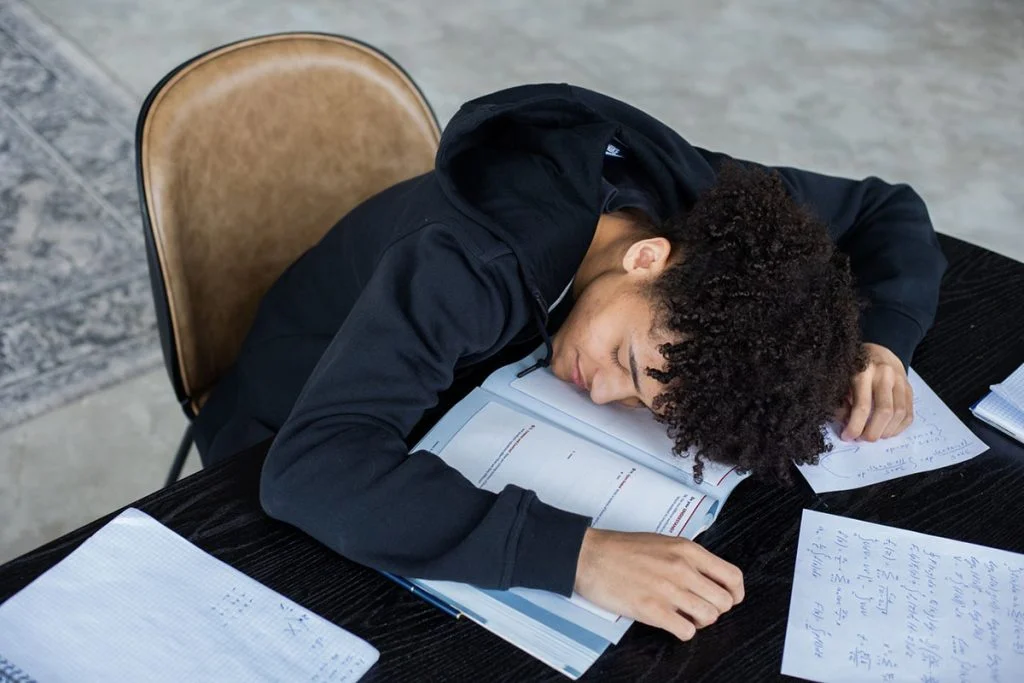
Many teenagers today are not getting enough sleep, and it’s starting to show in their daily lives. It is recommend that teens get about 8–10 hours of sleep each night, but most only get around 6–7 hours.
Early school start times, homework, sports, and staying up late on phones all make it harder for students to get the amount of rest that is necessary. As a result, many teens come to school already feeling tired before the day even begins.
Lack of sleep can have serious effects on students both in and out of the classroom. When teens don’t get enough rest, they often have trouble focusing, which can lead to lower grades and difficulty keeping up with assignments. It can also affect mood, making students more irritable, stressed, or anxious. Also, sleep deprivation can lower energy levels, which impacts performance in sports and other activities.
Even though it can be hard to change habits, getting more sleep can make a big difference. Going to bed at a consistent time, limiting screen use before bed, and creating a comfortable night routine can all help improve sleep.
As more attention is being brought to teen sleep studies, it’s becoming clear that better sleep isn’t just helpful, it’s necessary for students to succeed and stay healthy.